
American gold production is overwhelmingly concentrated in one state. That concentration comes from geology first and from a processing breakthrough second.
The deposits are invisible to the eye
Nevada's major gold occurrences are what geologists call Carlin-type deposits, in which gold particles are dispersed through sedimentary rock at microscopic size.
There are no visible nuggets and no quartz veins glinting in a creek bed. A rich sample looks like ordinary gray rock.
Because of that, the deposits were largely missed during the era of prospecting that shaped mining elsewhere in the American West. Panning and visual inspection, the tools of that period, simply cannot detect gold at this scale.
Processing technology unlocked them
Recovering finely disseminated gold requires crushing enormous volumes of rock and using chemical leaching to dissolve the metal from the ore.
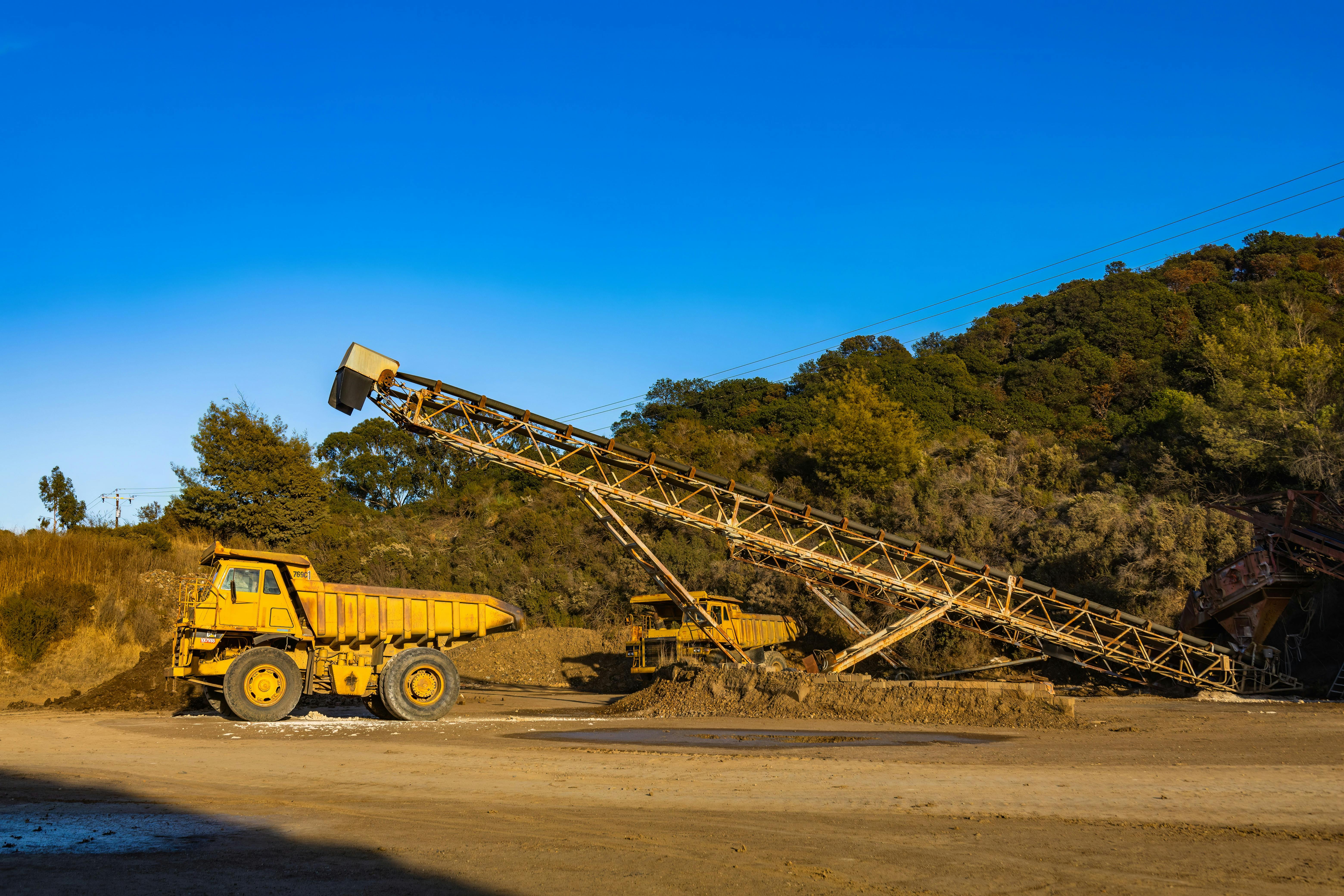
That approach only becomes economic at very large scale, with heavy earthmoving equipment and processing plants sized to match.
Once those techniques matured, ore that had been worthless became a viable resource, and exploration in the state accelerated sharply. Companies began drilling ground that earlier generations had walked across without a second look.
Grade is low but consistency is high
These deposits carry far less gold per ton than the narrow high-grade veins mined historically. What they offer instead is size and predictability.
A large, uniform ore body can support decades of production and justify the fixed infrastructure that low-grade mining requires.
Predictability also lowers financing costs, since lenders can model output with more confidence than they can for a narrow vein system.
Infrastructure compounds the advantage
Decades of activity have produced a regional cluster of processing facilities, equipment suppliers, assay laboratories and an experienced workforce.
A new project inside that cluster can sometimes truck ore to an existing plant rather than build one, which changes the economics of marginal deposits.
Established permitting pathways and known regulatory expectations add to the effect, even though approvals remain lengthy. Agencies that have reviewed similar projects before work from precedent rather than from first principles.
Skilled labor is the least portable of these advantages. Mill operators, blasting crews and metallurgists accumulate in one region and are difficult for a project elsewhere to recruit.
Concentration carries its own exposures
A production base gathered in one jurisdiction is sensitive to that jurisdiction's water availability, power costs, tax treatment and permitting decisions.
Arid conditions matter particularly, since large-scale processing consumes water in a region where it is contested and closely regulated.
Those constraints do not describe where any company's output goes next; they describe the specific set of conditions on which American production depends.