
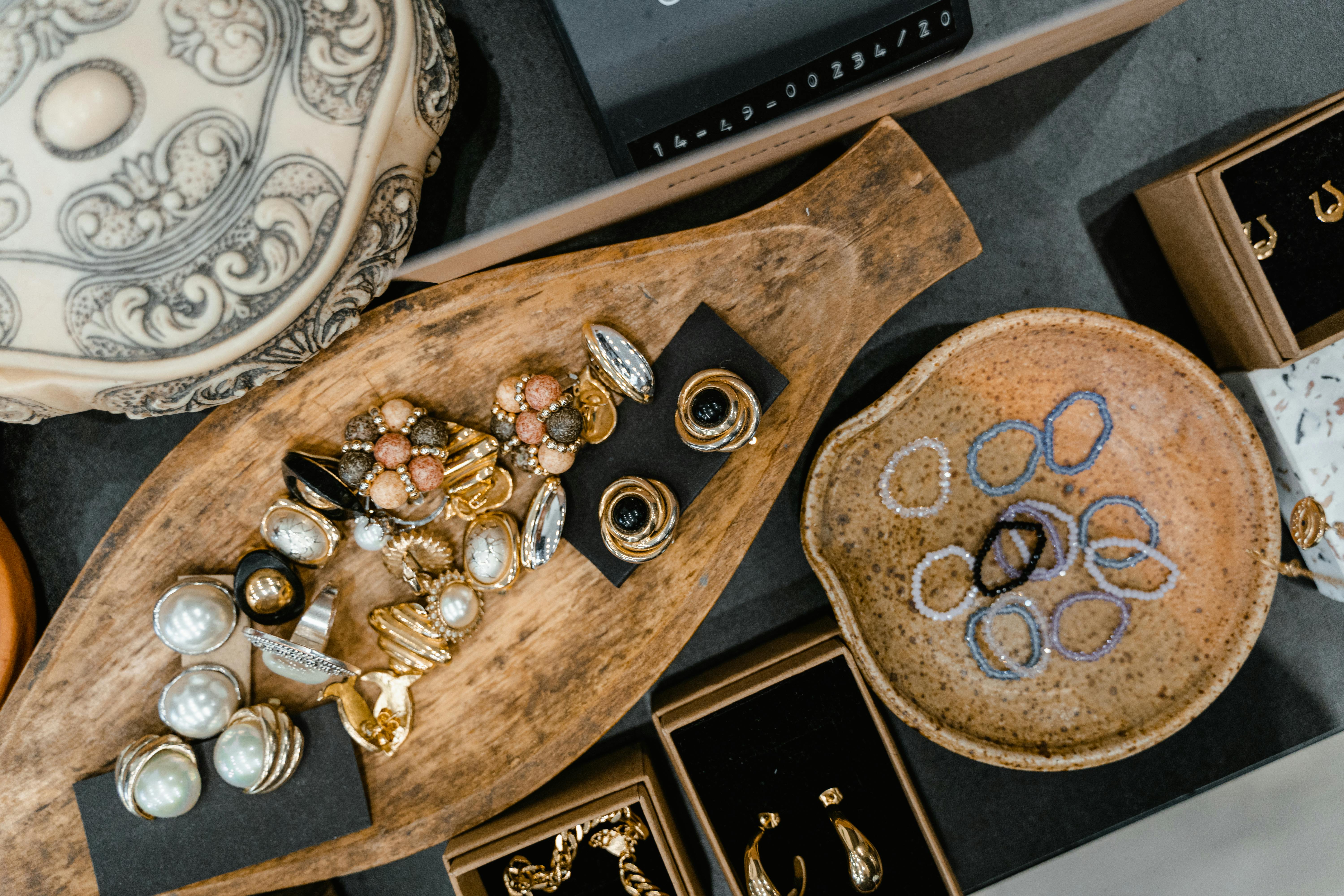
Jewellery sent for refining is rarely plain metal. Stones, solder, plating and non precious components all have to be dealt with before the gold can be assayed and recovered.
Refiners price on recoverable metal
A refiner pays for the fine metal it expects to recover, not for the gross weight of the item handed over.
Everything that is not precious metal must therefore be identified and excluded before a price can be quoted.
Where the composition is uncertain, the refiner protects itself by quoting conservatively, which is why mixed scrap fetches proportionally less than clean material.
Stones must be removed before melting
Most gemstones are damaged or destroyed by the temperatures used to melt gold, and diamonds burn in the presence of oxygen at those temperatures.
Removing them is manual work requiring skill, since the settings are designed to hold the stones permanently rather than to release them.
The labour cost of that work is deducted from the settlement, and on pieces with many small stones it can be significant relative to the metal recovered.
Solder and plating dilute the assay
Joints in jewellery are made with solder of lower fineness than the body of the piece, so a finished item assays slightly below its karat mark.
Plated components and base metal findings such as clasps and pins reduce the recoverable proportion further.
Refiners account for this by assaying a melted homogeneous sample rather than testing the surface, which is the only reliable way to establish what is actually present.
Small lots pay proportionally less
Refining involves fixed steps regardless of quantity: melting, sampling, assaying and settlement administration.
Spread across a small parcel those costs are large per gram, which is why consolidators buy from the public and sell on in bulk.
Each stage of that chain takes a margin, and a private seller is at the end furthest from the refinery.
Some pieces are worth more unmelted
A piece with recognised design, maker or period value can sell for a multiple of its metal content in the secondary market.
Melting destroys that value irreversibly, and quantities of collectable jewellery have been lost during periods of high metal prices for exactly this reason.
Establishing whether a piece has value beyond its metal is worth doing before it is sold by weight, because the decision cannot be undone.